The July 2026 Medicare GLP-1 Bridge:
What Family Caregivers Need to Know
For the last few years, trying to get Medicare to cover blockbuster weight-loss medications like Wegovy or Zepbound for an aging parent has been a bureaucratic nightmare. Unless your parent had a strict diagnosis of Type 2 diabetes, the system’s answer was almost always a flat "No."
You were left watching your parent struggle with their mobility, joint pain, and cardiovascular health, while a highly effective medication remained locked behind thousands of dollars in out-of-pocket costs.
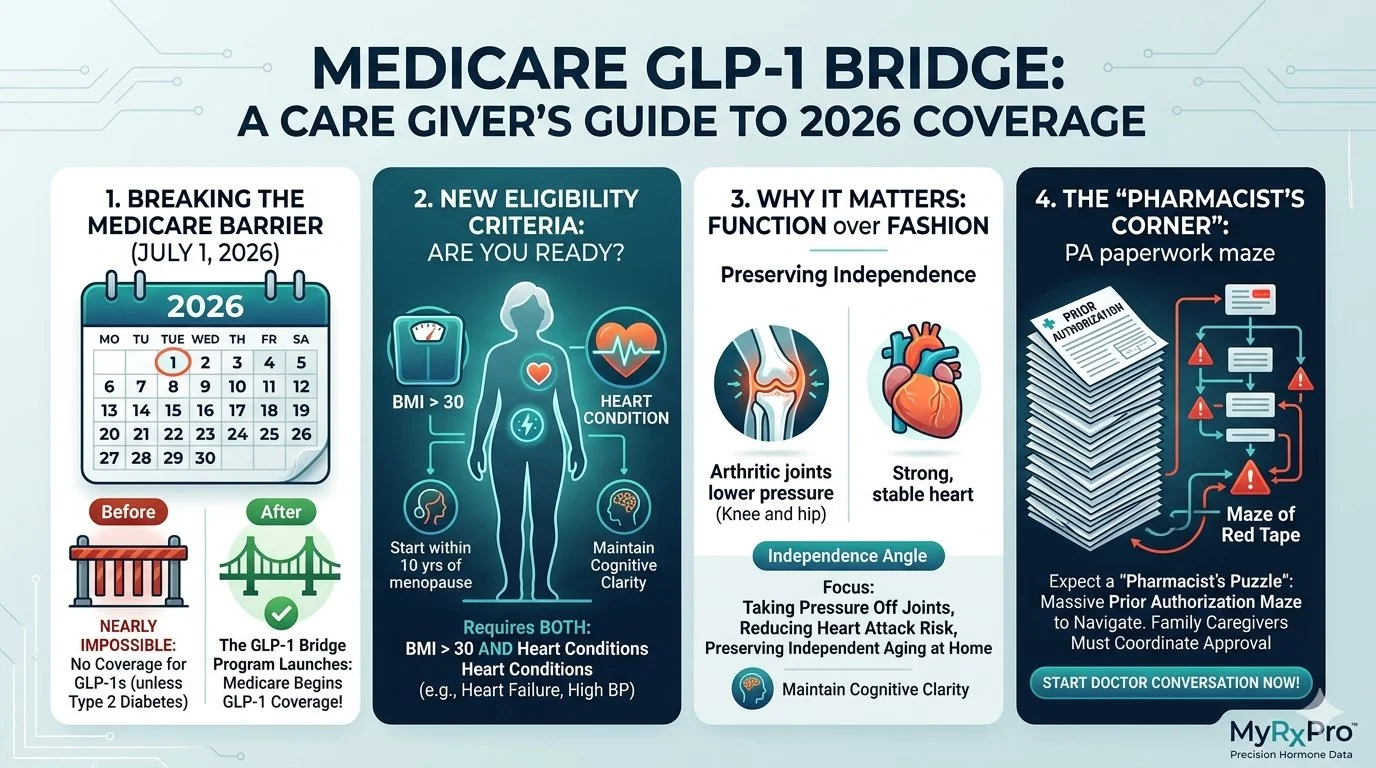
The system is finally changing. Starting July 1, 2026, the Centers for Medicare & Medicaid Services (CMS) is officially launching the "Medicare GLP-1 Bridge" program.
As a geriatric clinical pharmacist, I am keeping a close eye on this rollout because it is going to fundamentally change how we manage senior health. But like anything involving Medicare, it comes with a catch. Here is exactly what you need to know to help your parent navigate this new landscape.
What is the Medicare GLP-1 Bridge? Historically, Medicare Part D strictly prohibited coverage of drugs used solely for "weight loss." The Bridge program changes the criteria. Starting in July, Medicare will allow beneficiaries to access GLP-1 medications if they meet two specific requirements:
A BMI of 30 or higher.
At least one related cardiovascular or metabolic condition (such as heart failure, a history of stroke, or severe hypertension).
Why This is a Game-Changer for Seniors For older adults, this isn't about the number on the scale or fitting into old clothes. It is about preserving independence.
These medications are increasingly being prescribed for their profound cardiovascular benefits. By safely reducing weight, we can lower the strain on failing hearts, reduce the risk of secondary strokes, and relieve the physical burden on arthritic knees and hips. For an older adult, losing 10% of their body weight can be the difference between needing a walker and walking unassisted.
The Geriatric Warning Label: Muscle Mass While this access is incredible news, these drugs must be used carefully in older populations. Rapid weight loss in seniors often leads to sarcopenia (severe muscle loss). If your parent loses muscle instead of just fat, their fall risk actually increases.
If your parent's doctor prescribes this under the new Bridge program, you must ensure they are also prescribing a high-protein diet and strength-building exercises to protect their mobility.
The Pharmacy Catch: The Bureaucratic Maze Medicare is not going to just hand these expensive medications out at the pharmacy counter. The Bridge program requires a highly specific Prior Authorization (PA) process.
The system will expect you—the caregiver—to act as the coordinator between your parent’s primary care doctor and their Medicare Part D plan. The insurance company will require documented proof of their BMI and their cardiovascular history before they approve a single pen.
Your Action Plan for July 1st: If you believe your parent is a candidate for this, do not wait until July to start the process.
Step 1: Schedule an appointment with their primary care doctor in May or June to document their BMI and cardiovascular conditions.
Step 2: Ask the doctor to prepare the Prior Authorization (PA) paperwork ahead of the July 1 rollout.
Step 3: Talk to a clinical pharmacist about how to manage the potential side effects (like nausea or muscle loss) in an older, frailer body.
You don't have to navigate the Medicare maze alone. If you need help coordinating this transition, untangling the Prior Authorization requirements, or reviewing your parent's current medication list for safety, MyRxPro is here to guide you.
Book a 15-Minute Triage Call today at MyRxPro.com, and let's get your parent's plan in place.